Kaley Ubellacker
For the rushed reader …
Investors are increasingly pointing to 2026 as the year AI will reshape the labor market, according to a TechCrunch survey of enterprise VCs.
In a widely shared blog post, Andrej Karpathy wrote an accessible reflection on what actually changed in LLMs.
A new wave of consumer wearables is moving beyond tracking bodies to reading brains, as EEG-based headsets and headphones use AI to interpret brain signals for sleep, focus, communication, and mental health.
Good Reads 📖
Knowledge worker or knowledge watcher
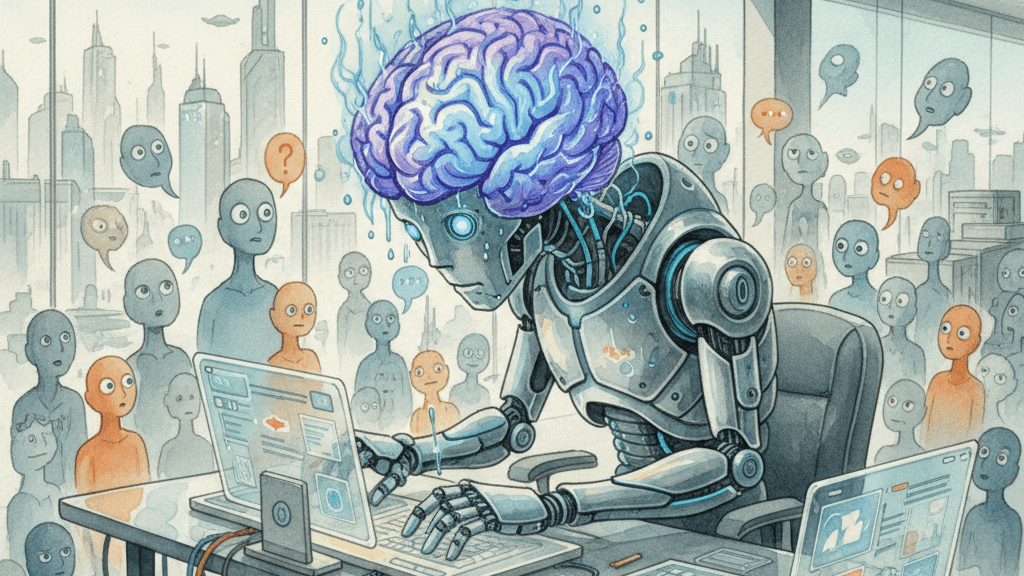
Companies say AI is only meant to assist, but is it just assisting employees out the door? Investors are increasingly pointing to 2026 as the year AI will reshape the labor market, according to a TechCrunch survey of enterprise VCs. While fears about automation have been simmering for years, recent data suggests the concern is valid: an MIT study found nearly 12% of jobs could already be automated, and companies are already citing AI as a reason for layoffs and reduced entry-level hiring. Multiple investors expect enterprise budgets to shift away from labor and toward AI over the next two years, with some predicting the rise of AI agents that move beyond productivity gains to automating entire workflows. Still, there’s disagreement on whether AI will truly displace workers or is simply a convenient explanation for cost-cutting. Some VCs argue it may be a scapegoat for layoffs even when adoption is uneven. However, if investors are right, breakup texts in 2026 will sound a lot more like “Sorry, it’s not you, it’s AI.”
Paradigm a dozen
AGI is still MIA, but there were plenty of AI advancements in 2025 worth knowing. In a widely shared blog post, Andrej Karpathy wrote an accessible reflection on what actually changed in LLMs, framing the year as a series of quiet but meaningful paradigm shifts rather than a single breakthrough. Karpathy walks readers through ideas like Reinforcement Learning from Verifiable Rewards (RLVR), the rise of jagged intelligence, agentic tools like Claude Code, and the emergence of vibe coding. What makes the piece stand out is how it translates deeply technical progress into intuitive concepts, like why models now reason differently, why benchmarks matter less, why new app layers like Cursor exist, and why interfaces for AI may soon look more like GUIs than chat boxes. According to Karpathy, value is likely to accrue next not just in bigger models, but in orchestration layers, developer tools, agents that live on local machines, and entirely new interaction paradigms. Now, THAT’S what we call agents for change.
An up and coming headspace
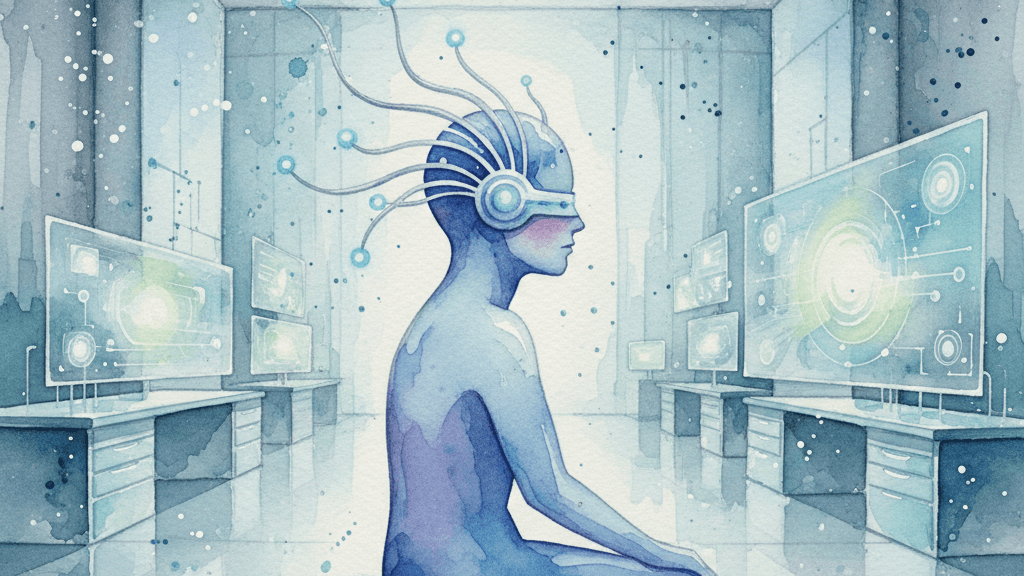
Wearables are riding a different train of thought. A new wave of consumer wearables is moving beyond tracking bodies to reading brains, as EEG-based headsets and headphones use AI to interpret brain signals for sleep, focus, communication, and mental health. The article highlights how advances in signal processing and machine learning are making noisy brain-wave data usable outside labs, enabling devices that can nudge the brain into deeper sleep, estimate cognitive focus, or even allow limited control of digital interfaces. At the same time, neurotech is starting to blur the line between wellness tools and medical devices, with some companies pursuing regulatory approval for at-home treatments for conditions like depression. Brain-computer interfaces are steadily shifting from niche research to consumer platforms, raising both opportunity and unresolved questions around data privacy, consent, and how much insight into the human mind users will be willing to trade for convenience and performance. Let’s hope eating brains stays in zombie movies only.
Market Stirrings 🚩
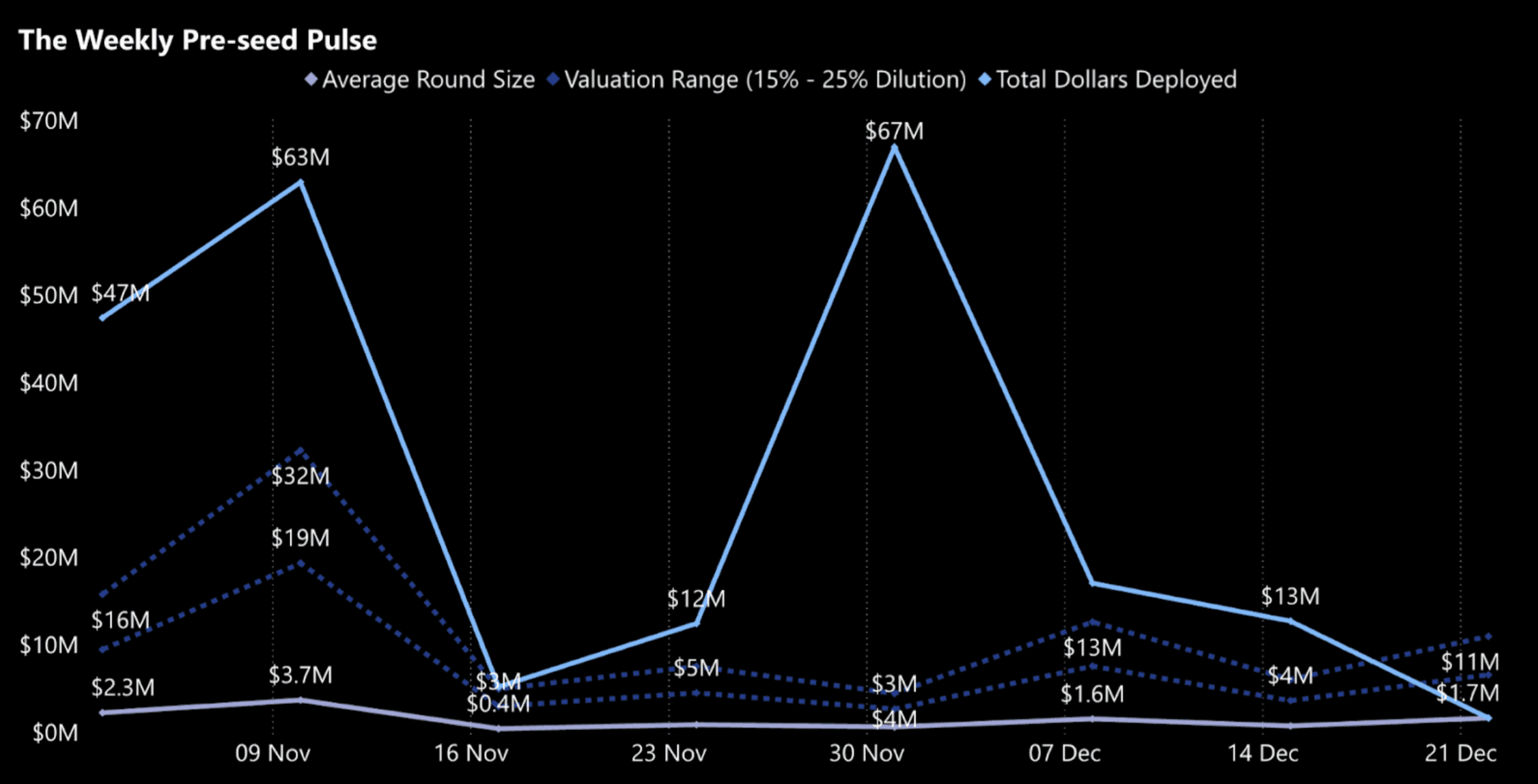
Here's what the week looked like in pre-seed:
$14.4M
18
Data aggregated from proprietary research and Crunchbase; valuation estimate based on 10-20% ownership stake.
Receive our original research and thinking right to your inbox before we share it with the rest of the world:
BREAKING IT DOWN FOR THE NEW YEAR
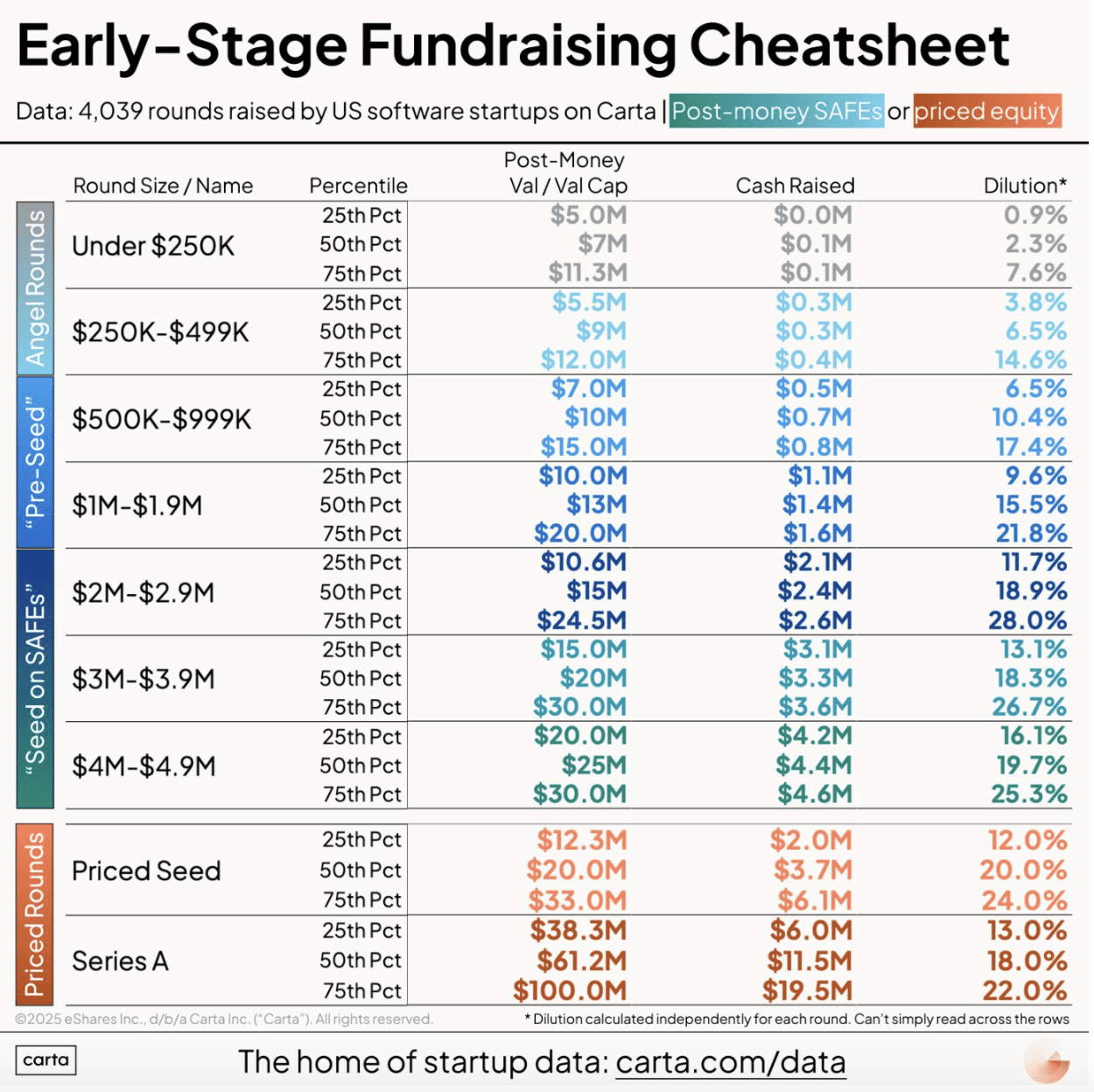
Carta’s new cheatsheet shows how dilution scales with pre-seed check size, among other key benchmarks. For rounds under $1M, the median dilution is 10.4%. Once raises cross $1M (up to $2M), median dilution jumps to 15.5%, a meaningful step-up showing how quickly ownership costs rise with larger early checks.
climatetech
Farmevo Technologies - No crop left behind.
Farmevo raised $1.5 million from Gutter Capital. Farmevo is building an AI remote sensing platform that lets farmers and forestry operators use drones to analyze real-time data.
healthtech
Sift Biosciences - T-ed up for success.
Sift Biosciences raised $3.8 million. Sift is developing an AI platform that designs immunotherapy boosters to activate pre-existing T cells and supercharge cancer treatments.
AI
Finiti LegaI - Stop checking it twice.
Finiti Legal raised $1.3 million. Finiti Legal is building an AI Compliance OS that automates drafting, verification, and benchmarking of regulatory filings for companies.
JOB OPPORTUNITIES
| VP of Finance | - Copper:
Rethinking the induction stove and making kitchen electrification more accessible than ever. Picture a fossil-free future, without sacrificing aesthetics.
| Full Stack Software Engineer | - OneImaging:
Envisioning the future of transportation beyond cars and into the realm of personal electric vehicles. Its first product, P1, is the ultimate tool for city navigation.
Outro🚪
Have any questions, feedback, or comments? Just reply here. We iterate and curate the newsletter according to your interests!
Some last matters of business:
If you’re a technologist (engineer or product manager / designer with a technical background) join us on the NVTC LinkedIn group if you haven’t. We’d love to have you!
Sign up here if you’re interested in co-investing with Necessary.
If you’re a startup founder, we’d love to help where we can! Brex provides full-stack finance solutions for startups. Sign up via Necessary and get bonus points.
Thanks for reading, and see you next week!