Kaley Ubellacker

Happenings at Necessary Ventures:
Wayve closed a $1.5 billion Series D round at an $8.6 billion valuation.
For the rushed reader …
Google VP Darren Mowry is sounding the alarm for two types of AI startups: LLM wrappers and AI aggregators.
New York hit pause on Waymo’s expansion plans this week, but robotaxis are continuing to roll into more U.S. cities, even though public opinion remains mixed.
A new study from MIT’s Center for Constructive Communication finds that AI chatbots often provide less accurate, less truthful, and sometimes condescending responses to certain users.
Good Reads 📖

Aggregators or aggravators
Save your wrapping for presents only. Google VP Darren Mowry is sounding the alarm for two types of AI startups: LLM wrappers and AI aggregators. His stance is that layering a UI on top of an existing large language model or bundling multiple models isn’t enough to survive in 2026. According to Mowry, wrappers that rely on thin IP, like basic GPT-powered apps and aggregators that leverage multiple models without creating unique value, will face margin pressure as model providers build enterprise features themselves. He compares the current AI environment to the early cloud era, when startups reselling AWS infrastructure were squeezed out unless they added deeper value through security or DevOps. He encourages startups to focus on building moats to protect their business through vertical specialization or genuine IP, citing opportunities in vibe-coding, developer platforms, direct-to-consumer AI tools, biotech, and climate tech. It’s time to make the moat of this news and double down on IP.

Living in a simulation
Robotaxis are steering clear of human error but are still getting stuck at stop signs. New York hit pause on Waymo’s expansion plans this week, but robotaxis are continuing to roll into more U.S. cities, even though public opinion remains mixed. Surveys show familiarity breeds acceptance, with residents in existing Waymo areas more supportive than those in new markets. Parents and women remain the most cautious. In spite of those reviews, AV companies like Waymo and Waabi are leaning on AI to expedite rollouts. The latest tool is AI “world models” which are being used to train vehicles virtually. The models simulate rare or hazardous scenarios to prepare for situations they haven’t yet encountered on real streets. Waymo cites a strong safety record, with fewer crashes and better protection for pedestrians; however, experts warn that even the best simulations can’t predict every hazard, which will always be a limit of relying purely on synthetic data. Maybe AI should visit the real-world DMV instead.
Rose-tinted data
Humans aren’t the only ones with a selective listening problem. A new study from MIT’s Center for Constructive Communication finds that AI chatbots often provide less accurate, less truthful, and sometimes condescending responses to certain users. Specifically, it gives lower quality answers to users who are non-native English speakers, less formally educated, or from outside the U.S., highlighting a troubling gap in accessibility for those who might benefit most from these tools. Testing across science and truthfulness datasets, the researchers found the largest performance drop occurs at the intersection of lower education and non-native English. Models even refuse to answer questions at higher rates or deliver patronizing language, sometimes mimicking broken English. The study suggests that AI may unintentionally withhold knowledge from certain groups, and personalization features like ChatGPT’s Memory could amplify these disparities. The findings echo human biases documented in social science research. How do you talk down a chatbot from talking down?
Market Stirrings 🚩
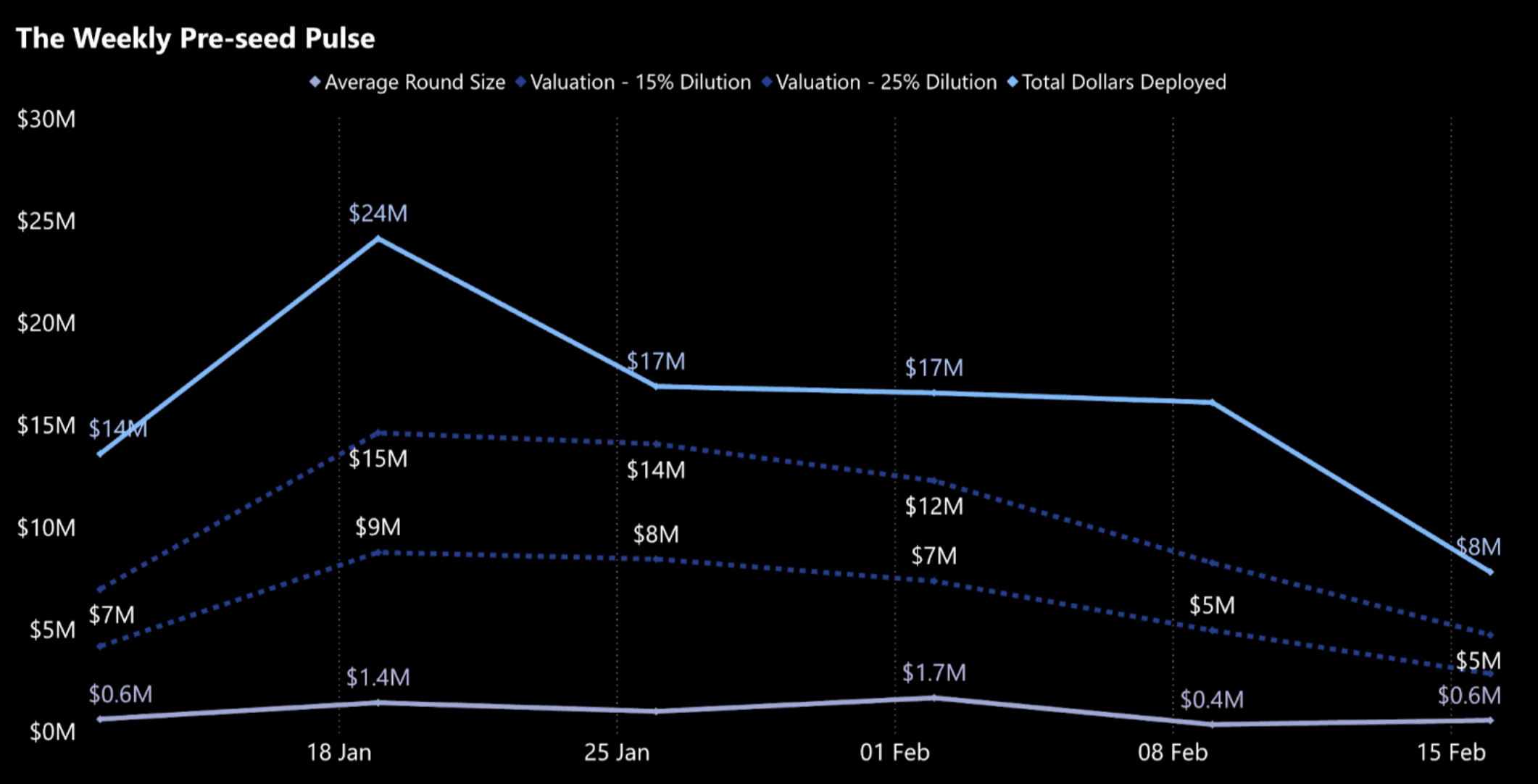
Here's what the week looked like in pre-seed:
$7.8M
14
Data aggregated from proprietary research and Crunchbase; valuation estimate based on 10-20% ownership stake.
Receive our original research and thinking right to your inbox before we share it with the rest of the world:
THE LAY OF THE LAND IN JAN
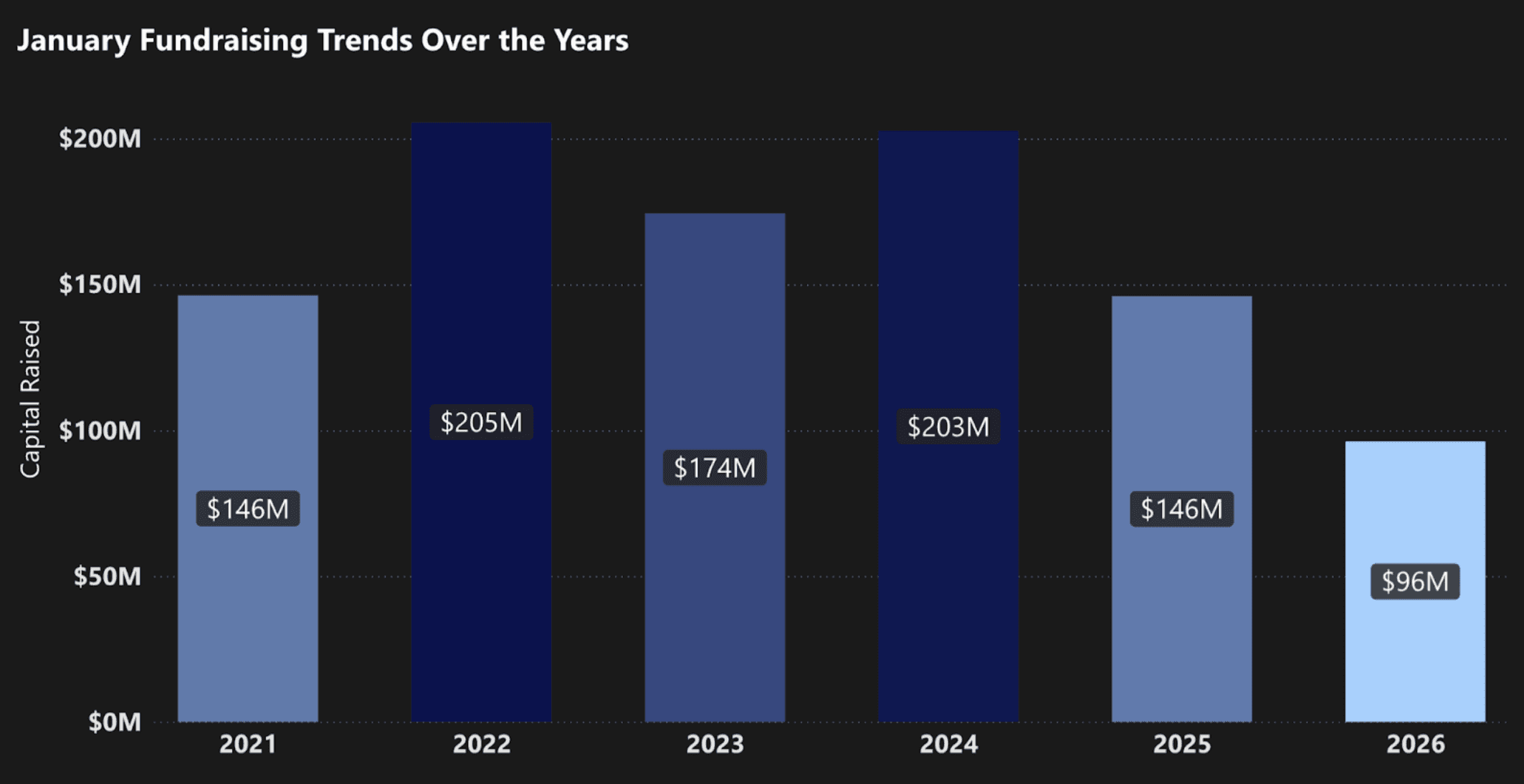
January kicked off the year with a slow start. Capital raised for the month dropped 34% year-over-year and 53% since its peak in 2022 and 2024. While the gap can partially be attributed to stealth rounds and reporting lags, February has some catching up to do.
healthtech
Lexi - Bedside babel.
Lexi raised $1.4 million led by Informed Ventures. Lexi is building an AI medical interpreter that delivers accurate translations to break language barriers between patients and healthcare providers.
fintech
Rizon - Banking on the future.
Rizon raised $2 million from Market One Capital. Rizon is building a global dollar-based neobank that enables freelancers and remote workers to manage their money with low-cost international payments.
AI
Marquee - The real draft kings.
Marquee raised $1.2 million led by AnD Ventures. Marquee is creating an AI decision platform that unifies recruitment data to help professional sports teams identify talent and avoid transfer mistakes.
JOB OPPORTUNITIES
| VP of Finance | - Copper:
Rethinking the induction stove and making kitchen electrification more accessible than ever. Picture a fossil-free future, without sacrificing aesthetics.
| Full Stack Software Engineer | - OneImaging:
Envisioning the future of transportation beyond cars and into the realm of personal electric vehicles. Its first product, P1, is the ultimate tool for city navigation.
Outro🚪
Have any questions, feedback, or comments? Just reply here. We iterate and curate the newsletter according to your interests!
Some last matters of business:
If you’re a technologist (engineer or product manager / designer with a technical background) join us on the NVTC LinkedIn group if you haven’t. We’d love to have you!
Sign up here if you’re interested in co-investing with Necessary.
If you’re a startup founder, we’d love to help where we can! Brex provides full-stack finance solutions for startups. Sign up via Necessary and get bonus points.
Thanks for reading, and see you next week!